What Omniverse means in practice
What NVIDIA Omniverse provides
What Smart Spatial adds
From 3D model to testable system
Simulate before deployment
Validate assumptions
Connect real-world data
Keep one shared 3D foundation
See the Workflow in Action
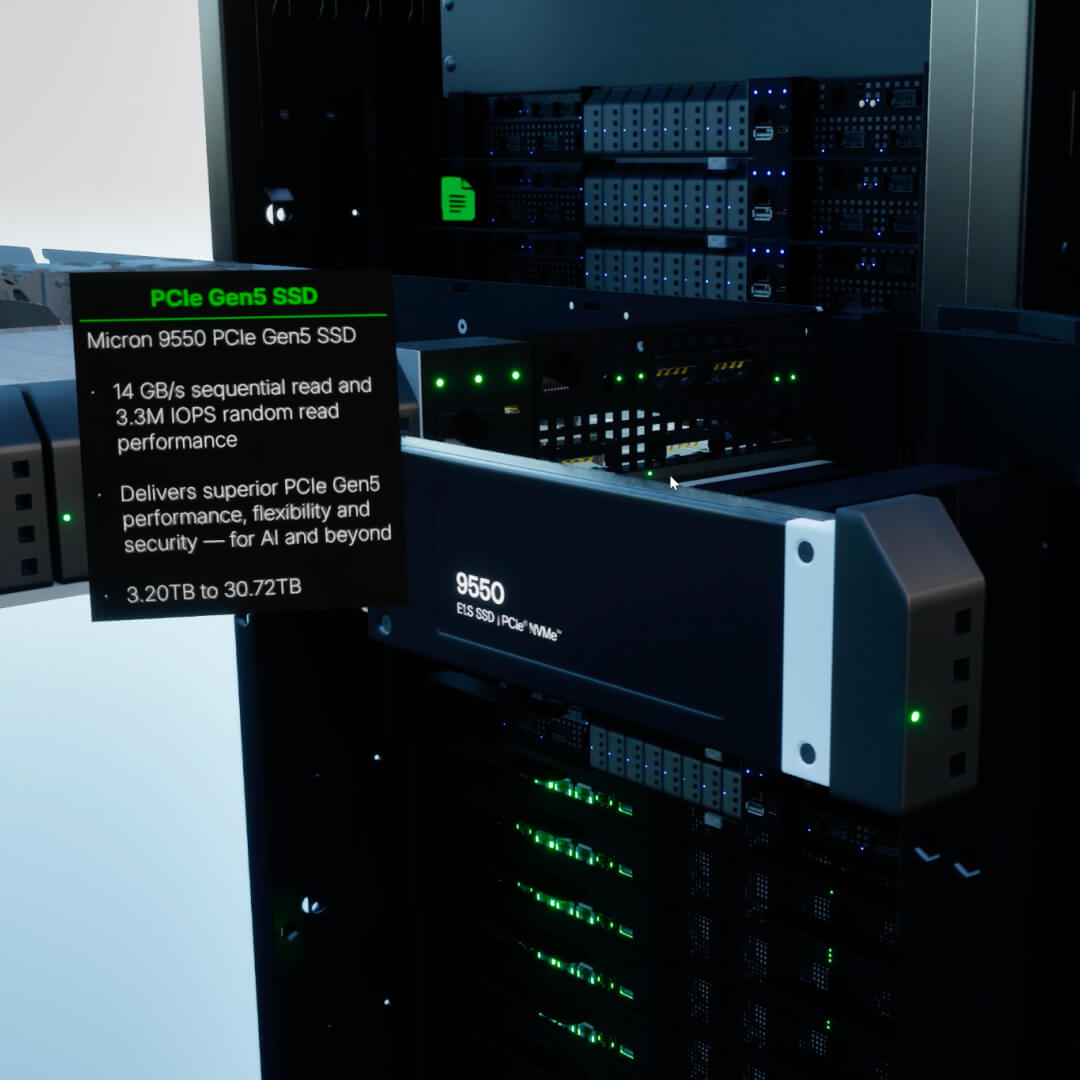
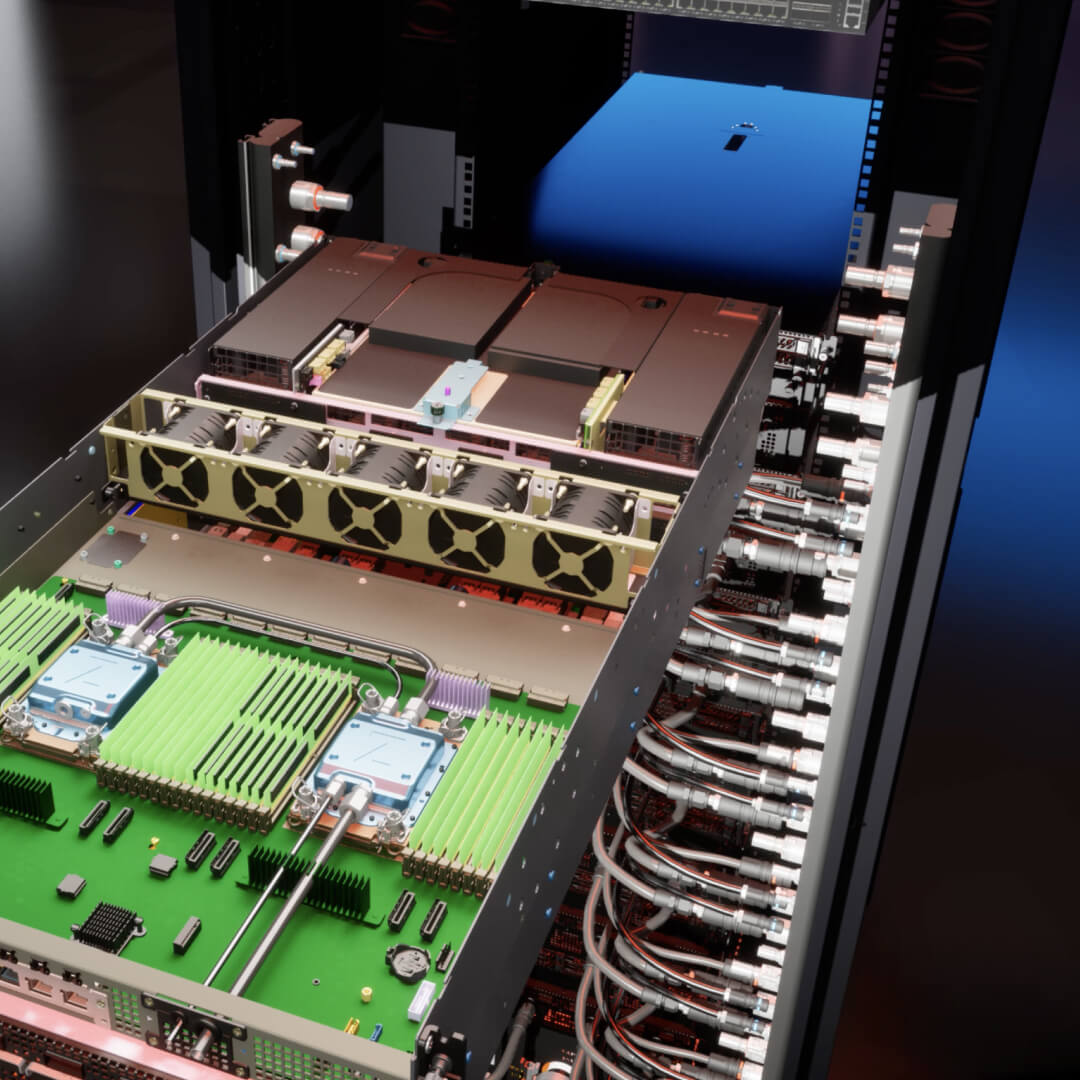
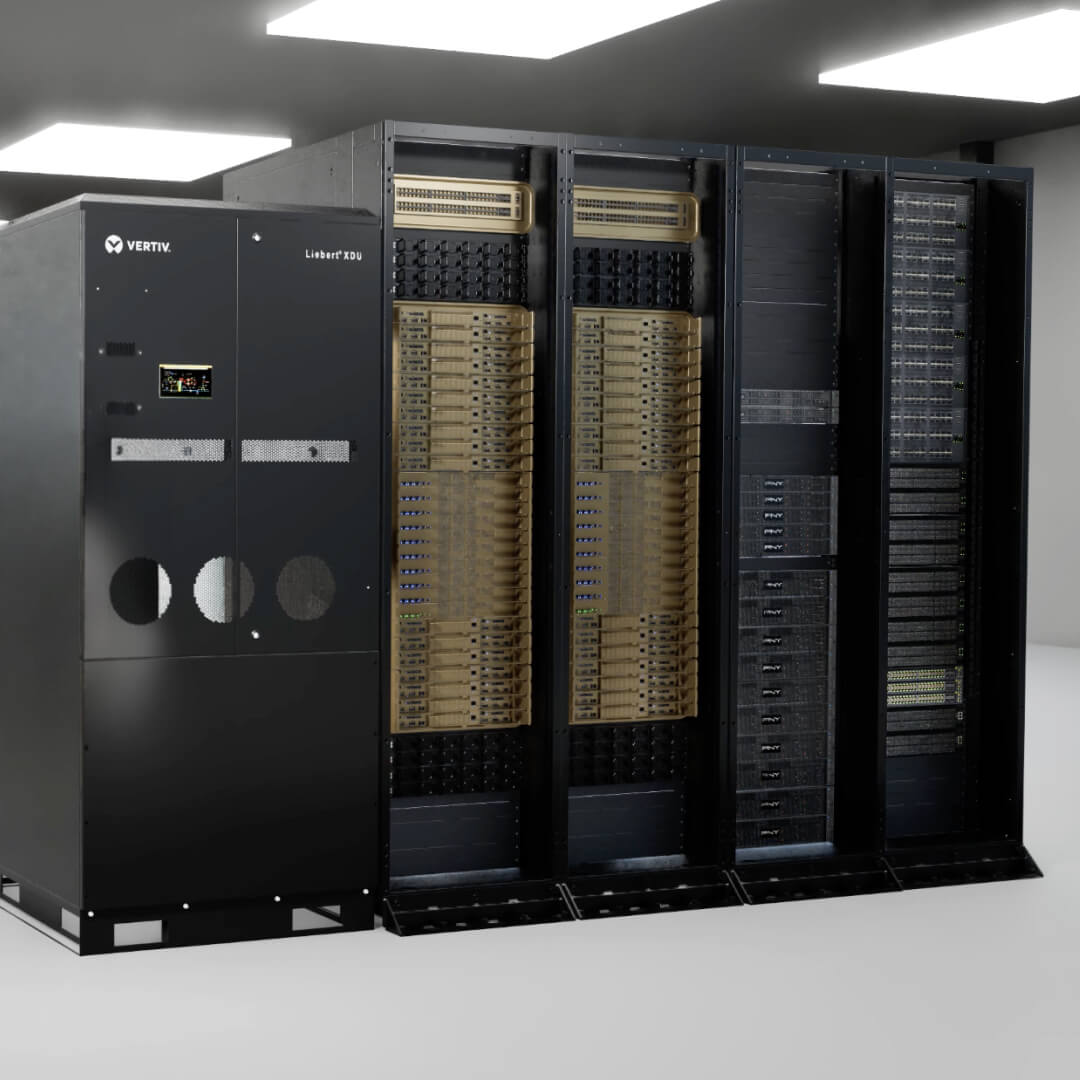
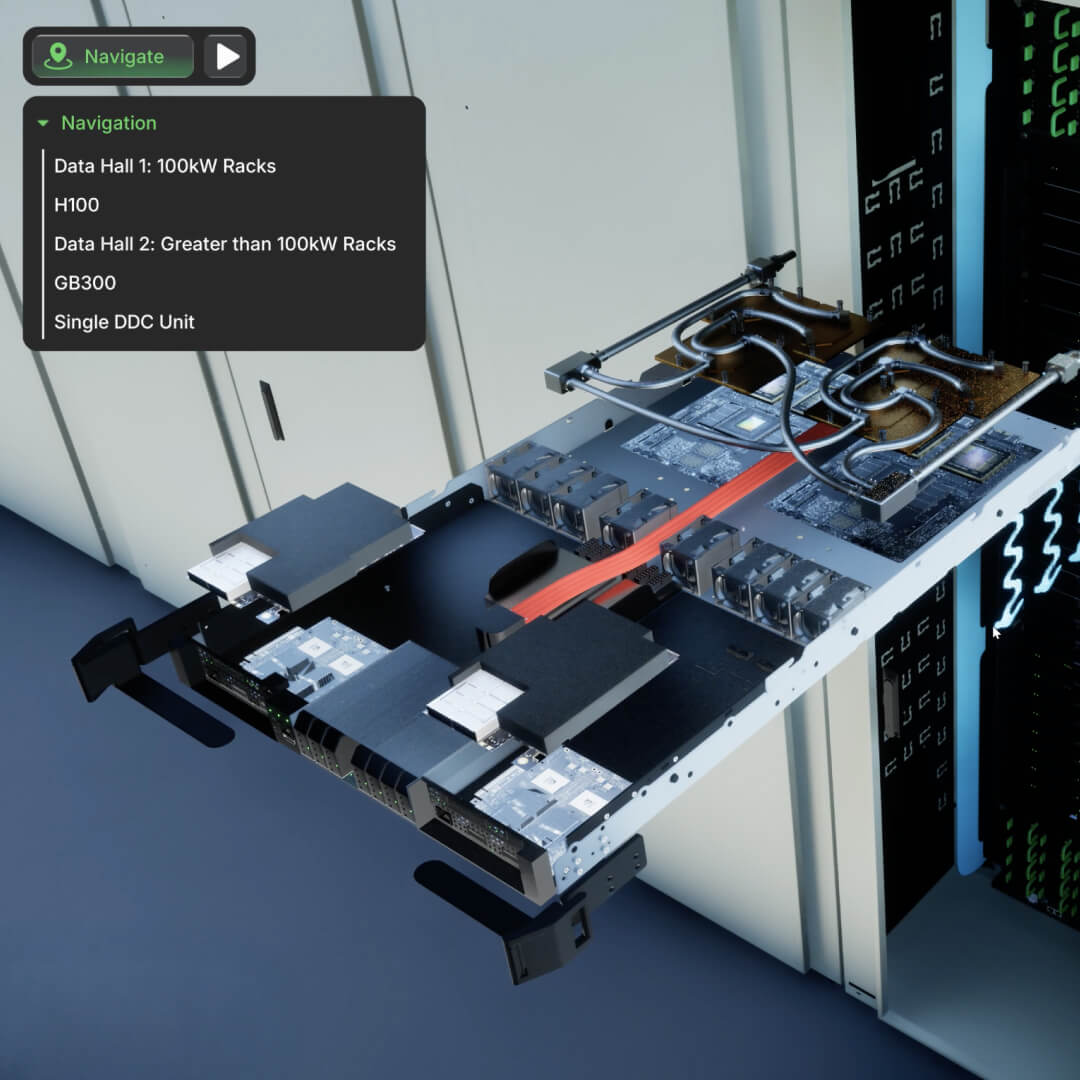
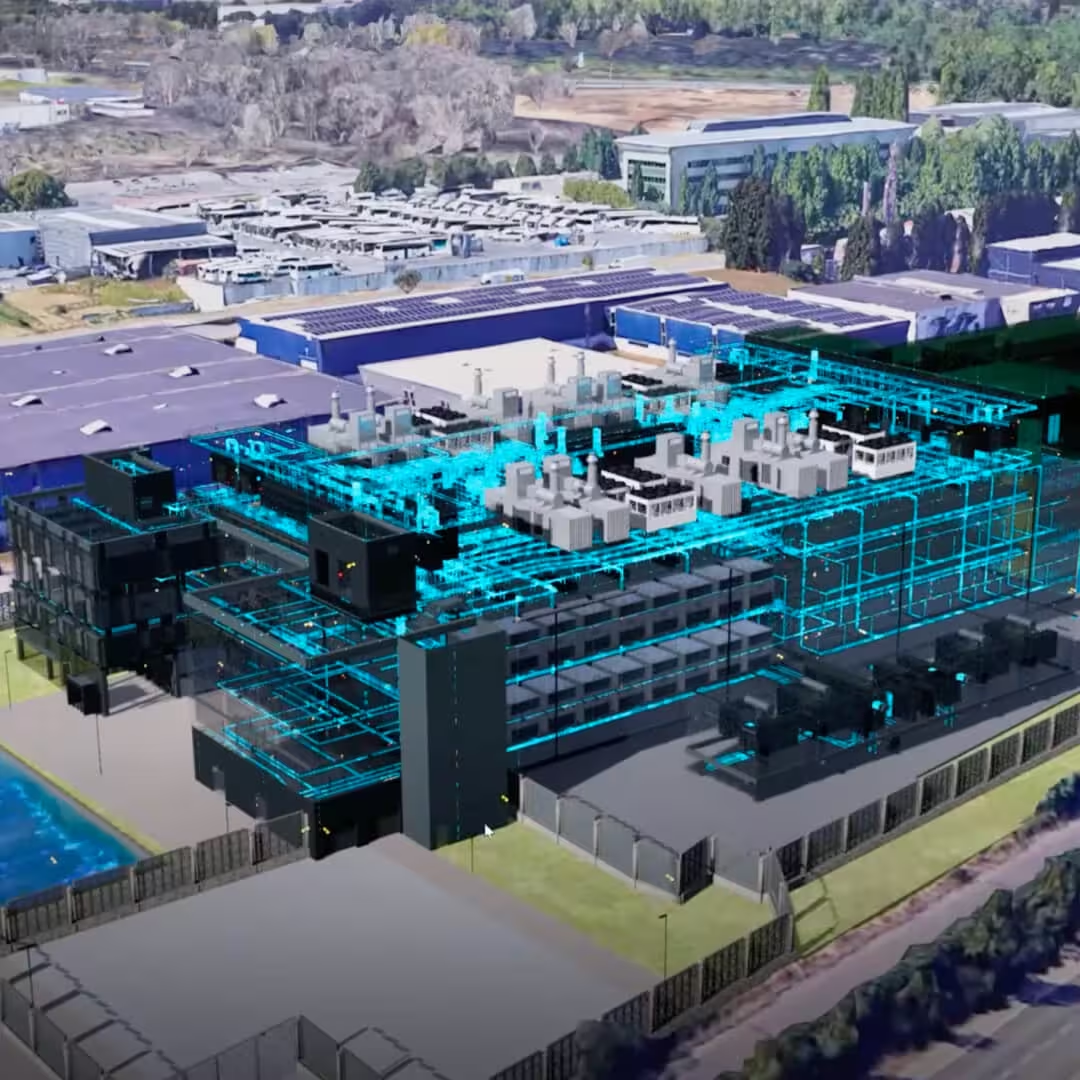
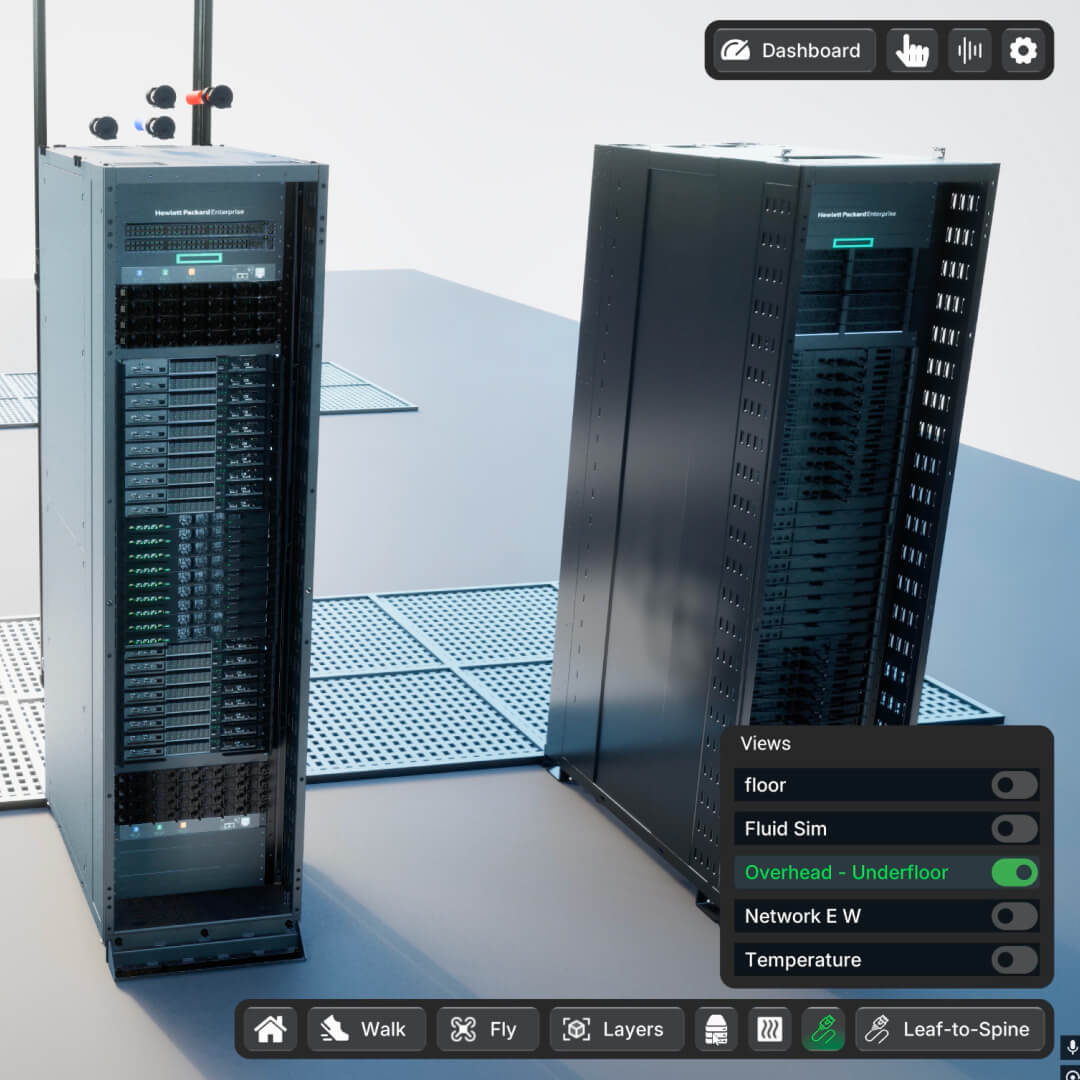
Layout Your Data Center
Build and arrange your data center environment directly within NVIDIA Omniverse.
Run Cooling Simulation
Start a cooling simulation using Schneider Electric EcoStruxure IT Design CFD.
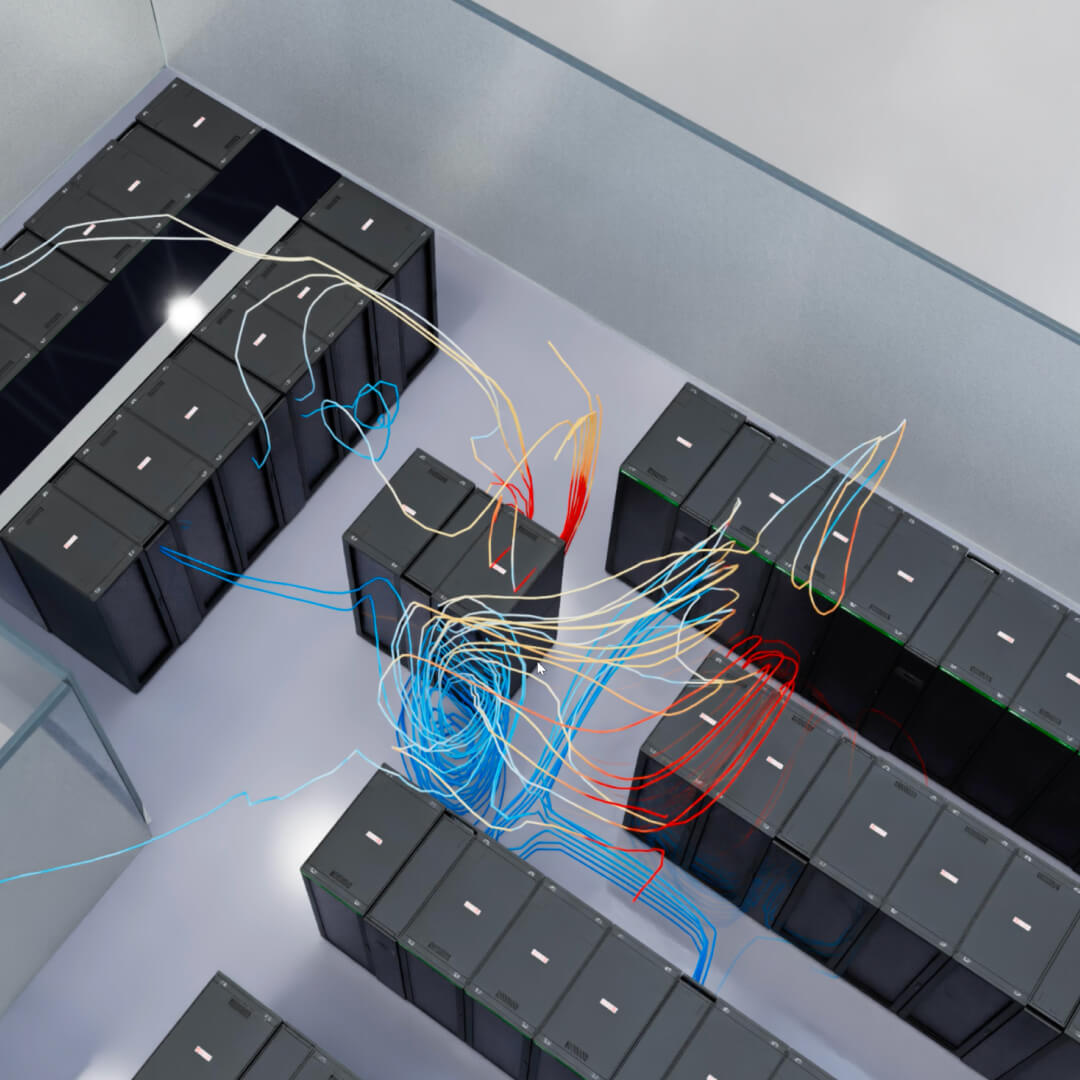
Visualize Airflow Behavior
Review key airflow patterns through dynamic streamline visualization.
Iterate on Cooling Architecture
Refine your cooling architecture using simulation-informed feedback.
Fully Interactive ITD CFD in Omniverse
Edit, simulate, and visualize your entire data center workflow within a connected Omniverse environment.
How Smart Spatial operationalizes Omniverse
Smart Spatial acts as the Digital Twin OS behind Omniverse-based deployments — structuring assets, workflows, and live data so the twin remains reusable across teams and use cases.
Ingest and normalize source data
Convert to OpenUSD and structure for reuse
Connect to Omniverse Nucleus
Build Omniverse-native workflows
Operationalize with live data
Result: not a one-off demo, but a reusable platform asset
What we deliver
- OpenUSD asset library
Structured, reusable, version-ready scene assets. - SimReady upgrades
Semantics, metadata, physical properties, and data bindings. - Nucleus-ready scene organization
Collaboration and governance across teams and tools. - Interactive workflows
Planning, validation, training, and operational experiences. - Performance tuning
Optimization for large scenes and real-time navigation. - Documentation and handoff
A maintainable foundation your team can extend over time.
Why OpenUSD matters
OpenUSD is what keeps the digital twin from being trapped inside a single tool or one-off workflow. It provides a portable, composable foundation for 3D assets, metadata, and scene structure, making the twin easier to maintain as programs scale. NVIDIA’s OpenUSD materials position it as the interoperability layer for industrial and simulation applications.
Example workflows we support
- Data center planning and validation
Layout decisions, cooling context, and system change review. - Mission-critical facility simulation
Scenario testing before changes reach production environments. - Operations and training environments
Workflows that reflect real system behavior instead of static models. - Sales and executive experiences
The same 3D foundation used by engineering, adapted for communication and decision support.