

Smart Spatial is proud to announce that enterprise digital twin deployments powered by our platform will be showcased by multiple partners at NVIDIA GTC 2026 (March 16–19).
Built across Unreal Engine and NVIDIA Omniverse, these deployments bring products, systems, and infrastructure into interactive, real-time 3D environments designed for both visualization and operational use.
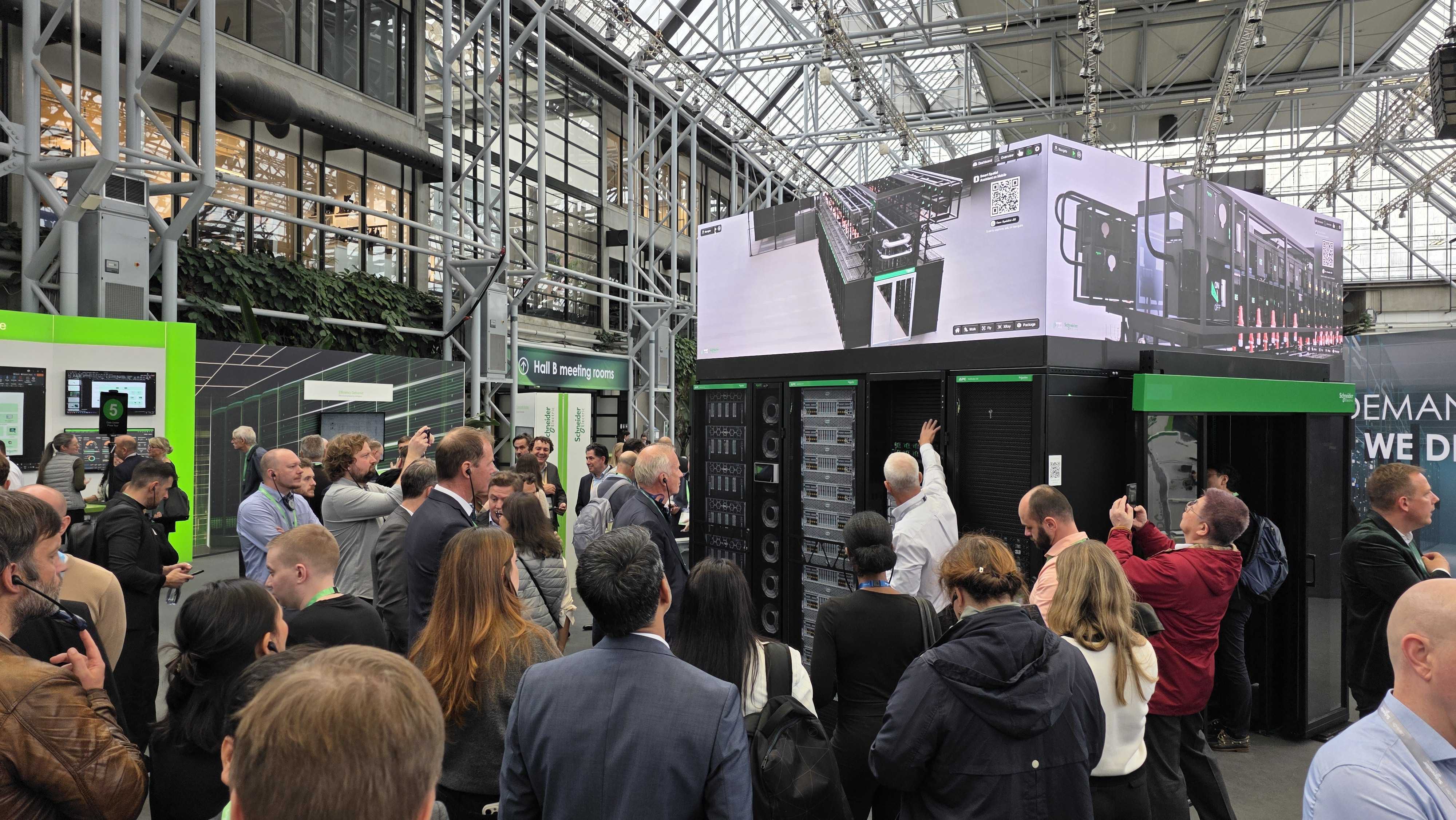
Smart Spatial works with leading enterprises, including Schneider Electric, Hewlett Packard Enterprise, Motivair, ZutaCore, DDC Solutions, and others, to build and deploy digital twins that help teams present, test, and operate complex products and infrastructure in interactive 3D.
What is a digital twin?
A digital twin is a virtual model of a product, system, or environment that allows teams to simulate changes, evaluate performance, and identify issues before making decisions in the real world.
Why this matters
As enterprise investment in AI and simulation grows, organizations are placing greater emphasis on digital assets that can be used beyond static rendering. The same 3D foundation increasingly needs to support:
- product storytelling and go-to-market experiences
- simulation and scenario testing
- workforce training and operational workflows
Smart Spatial’s Digital Twin OS is designed to help make that possible by giving teams a repeatable way to structure, deploy, and scale digital twin experiences across functions.
What will be showcased at GTC
At GTC 2026, Smart Spatial-powered deployments will be featured across three core enterprise applications:
- Marketing and go-to-market
Interactive Unreal Engine experiences used in executive briefings, trade shows, and customer engagements to communicate complex products and systems in real time. - Simulation and planning
NVIDIA Omniverse-based digital twins used for physics-based simulation, scenario testing, and pre-deployment validation. - Operations and training
Interactive 3D environments that support workforce training, service workflows, and ongoing system management.
One featured example is Schneider Electric’s simulation demonstration built in NVIDIA Omniverse, highlighting a growing enterprise priority: digital assets designed for physics-based simulation, not just visualization.
Leadership perspective
“Enterprises no longer want separate 3D assets for sales demos, simulation, and operations,” said Arthur Alter, CRO of Smart Spatial. “They want a repeatable pipeline that supports all three. Our Digital Twin OS helps make that practical across teams and deployments.”
“Enterprise teams are under pressure to make the same 3D assets work across product demos, simulation, and operations,” said Dennis Khvostionov, CTO of Smart Spatial. “The technical challenge is not just rendering quality — it’s building a repeatable pipeline that keeps data, interactions, and performance aligned across environments. Smart Spatial’s Digital Twin OS is designed to make that deployment workflow practical across Unreal Engine and NVIDIA Omniverse.”
If you are attending NVIDIA GTC 2026 and want to learn more about how Smart Spatial supports enterprise digital twin deployments, contact us at contact@smartspatial.com or visit smartspatial.com.
About Smart Spatial
Smart Spatial provides a Digital Twin OS that helps enterprises design, deploy, and scale digital twins across marketing, simulation, and operations. The platform integrates Unreal Engine and NVIDIA Omniverse to create interactive 3D environments built on NVIDIA GPU infrastructure.